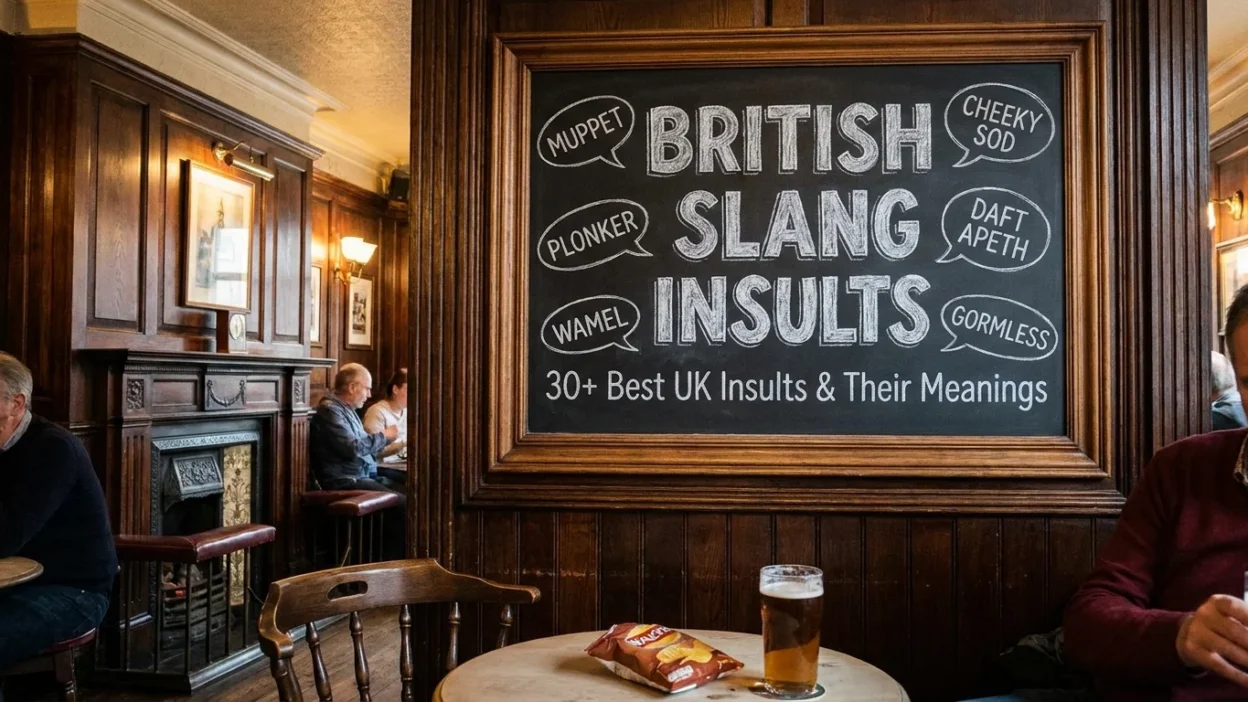
british slang insults people have a special talent for insults. They’re not just mean words. They’re creative, witty, and often hilarious. An American living in the UK described them as being “roasted, just so, elegantly” .
What makes British insults so unique? They’re often playful. You can call your mate a “plonker” and still be friends. It’s all about the tone. A word that sounds harsh can actually be a term of endearment .
However, some are genuinely savage. The context matters. Insults can be used to show affection, make a joke, or shut someone down. It’s a key part of British humor and everyday banter.
Many of these words are at risk of dying out. A recent study found that 15 classic insults might disappear within a generation . So, let’s keep them alive!
Here’s your guide to the best British slang insults. We’ll cover the classics, the modern ones, and everything in between.
H2: Classic British Insults That Are Still Gold
These are the old-school insults. They’ve been used for decades. Some come from TV shows. Others have been around for generations.
Plonker
This is a classic. You might know it from Only Fools and Horses. Del Boy always called his brother Rodney a “plonker” .
What does it mean? A plonker is someone who’s done something silly. It’s an affectionate way to call someone an idiot .
Example: “You forgot your keys again? You plonker!”
Prat
“Prat” is short and punchy. It’s a fairly mild insult. You can use it with friends and family . It just means someone is being foolish or annoying.
Git
Calling someone a “git” is very British. It’s similar to calling someone a “jerk” in America . Like “prat,” it’s not super offensive. It can even sound endearing with the right tone. “He’s a silly git, but I love him!”
Muppet
Yes, this comes from Jim Henson’s puppets. Calling someone a “muppet” means they’re being clueless or incompetent . It’s light-hearted and fun.
Numpty
This is a personal favorite. It comes from Scotland. It means someone who’s been a bit daft . It’s very harmless. People often use it about themselves. “I left my coffee on the car roof. What a numpty!”
Pillock
This is another great word for “idiot.” It’s considered a classic . It works well when someone makes a silly mistake.
Tosser
This is a bit stronger. It means someone is obnoxious or unpleasant . It can also mean something a bit ruder . It’s not a word for grandma.
H2: Insults That Americans Love
British insults have gone global. Several social media stars have shared their favorites. They can’t get enough of them.
Melt
According to American content creator K Jordy, “melt” is the number one British insult . It describes someone who is overly emotional or weak. Someone who’s easily manipulated .
He explained it perfectly: “Your girlfriend has been doing you dirty but you’re still with her – what an absolute melt” . It gained popularity through shows like Love Island .
Donkey
“Donkey” is another favorite . It’s an old-school insult. It means someone isn’t very smart or is being stubborn . It’s a bit like calling someone an “ass.”
Mug
Calling someone a “mug” is very common . It means they’re gullible or easily fooled . If you get taken advantage of, you’re a mug. There’s also a related phrase: “mugged off.” That means being made to look foolish .
Wind Your Neck In
American Paige Wester fell in love with this one . It means “calm down” or “mind your own business.” It’s a funny, visual way to tell someone to back off. It sounds great in a British accent .
Bang Out of Order
This means something is completely unfair or unacceptable . It’s a strong way to say someone has crossed the line.
Bollocks
One commenter told Paige to “wait until you realise how versatile the word ‘bollocks’ is” . It’s used for everything. It can mean nonsense (“That’s bollocks!”). Or it can mean something is bad (“It’s gone bollocks up”). It’s the ultimate Swiss Army knife of British swearing.
H2: Modern and Creative Insults
British people love creative insults. They’re often abstract and weird. But that’s what makes them funny.
Weapon
Calling someone a “weapon” is a modern classic. It’s like calling them a tool. It means they’re being annoying or useless. Rob Delaney specifically mentioned this one .
Length
Yes, just “length.” It’s weird, but it works. One Twitter user heard someone shout, “Fuck off you LENGTH!” . It doesn’t make logical sense. But you get the feeling. It’s a very British thing.
Dishcloth or Quilt
These are other random objects used as insults . It’s the idea that the person is as useless as a wet dishcloth. It’s creative and funny.
Parcel
“Absolute PARCEL, mate” . It’s another object-based insult. It suggests the person is a bit pathetic or useless.
Dry Lunch
This is a great one for insulting someone’s personality . It means they’re boring. Like a dry, sad sandwich with nothing interesting about it.
Pothole
You call a person a “pothole” to suggest they’re annoying or in the way .
H2: Insults That Might Not Survive
As language changes, some words are disappearing. A survey found that 72% of Brits feel we have a unique style of insults . Yet, many are dying out.
Here are some classics at risk of being forgotten by younger generations :
- Lummox: A clumsy oaf.
- Bampot: An obnoxious person.
- Blighter: Someone who causes trouble.
- Ninny: A fool.
- Cad: A dishonorable man.
- Tosspot: A drunkard.
- Toe rag: A contemptible person.
- Nitwit: A stupid person.
- Scallywag: A mischievous person.
They have a certain charm, don’t they? Let’s not let them die. Start using “numpty” more often!
H2: Savage and Elaborate Takedowns
Sometimes, a single word isn’t enough. British insults can be entire sentences. They can be brutal and incredibly clever.
“You’ve Got a Face Like a Bag of Smashed Crabs”
This is a classic. It’s a creative way to say someone is ugly. Another version: “a face like a bulldog chewing a wasp” . It’s descriptive and savage.
“You’re a Sandwich Short of a Picnic”
This means someone is not very smart. They’re missing a few crucial brain cells . It’s a polite, funny way to call someone stupid.
“If You Want to Lose Weight, Try Shaving Your Legs”
This is a classic backhanded compliment. It suggests someone is hairy . It’s weirdly specific. But that’s what makes it so effective.
“Yer Da Sells Avon”
This is a modern classic from Twitter. A “da” is a dad. Saying their dad sells Avon (a makeup brand) implies he’s not a tough guy. It’s a funny, confusing insult .
“Yer Da Sits at the Top of the Stairs and Pretends He’s the Chaser”
This is even more confusing. The Chaser is from a quiz show. It implies the person’s dad is a bit sad. He’s pretending to be on TV alone. It’s brilliantly cruel and specific .
“Pigs in a Sty Smell Better Than You Do”
Simple. Effective. Crude . It means you stink.
H2: A Quick Warning About Tone
Here’s the most important rule. Tone is everything in British insults. A word like “git” or “muppet” can be friendly with a smile. But with an angry voice, it becomes harsh .
These words are usually meant for friends and family. Don’t call a stranger a “plonker” unless you want trouble. It’s about playful banter, not genuine cruelty. If you get the tone right, you sound like a true Brit. If you get it wrong, you might start a fight!